

High blood pressure (hypertension) is common among people needing knee replacement, especially in India. If not well-controlled, hypertension can complicate surgery and recovery. Fortunately, with proper precautions, most patients with high blood pressure can safely undergo knee replacement (including robotic-assisted surgery) and achieve excellent outcomes. This article explains why blood pressure matters, how to prepare safely, and what steps to take preoperatively.
Why Blood Pressure Matters in Knee Surgery
High blood pressure increases surgical risks. Uncontrolled hypertension can lead to excessive bleeding, fluctuating heart rate, or even cardiac events during surgery. It can also impair wound healing and raise the risk of postoperative complications. For this reason, surgeons and anesthesiologists pay special attention to blood pressure before knee replacement. By optimizing blood pressure control, doctors make anesthesia safer and help ensure a smoother recovery.
Pre-Operative Medical Evaluation
Before surgery, hypertensive patients need a thorough health check. This typically includes:
- Blood Pressure Monitoring: Keep a log of home BP readings in the weeks leading up to surgery.
- Electrocardiogram (ECG): To assess heart rhythm and detect ischemic changes.
- Echocardiogram (Heart Ultrasound): If there are symptoms of heart disease (chest pain, breathlessness) or heart murmurs.
- Blood Tests: Complete blood count (CBC), blood sugar (HbA1c or fasting glucose), kidney function (creatinine, electrolytes), and coagulation profile. These catch anemia or metabolic issues that could affect surgery.
- Specialist Clearance: Referral to a cardiologist may be needed if BP is very high or if there are heart issues. They will evaluate for any organ damage and advise on optimizing BP.
Table: Pre-Operative Actions, Responsible Clinician, Timing
- Blood pressure log: Patient / Primary Care Doctor — Start ~ before surgery
- Cardiology evaluation: Cardiologist — before surgery if needed
- ECG, Echo: Cardiologist/Surgeon — before (or at pre-op clinic)
- Labs (CBC, electrolytes, glucose): Primary Care/Surgeon — before surgery
- Anesthesia consult: Anesthesiologist — before surgery
Target Blood Pressure Levels
What BP is “safe” for surgery? There is no one-size-fits-all answer—goals must be individualized. However, guidelines suggest:
- Referral target: Try to have BP consistently below about 160/100 mmHg in the months before surgery. This helps avoid last-minute cancellations.
- Day-of-surgery threshold: Many experts agree that procedures can proceed if the patient’s BP is up to 180/110 mmHg on the day of surgery. Above that, the anesthesiologist and surgeon will work with you and your doctor to manage it carefully or possibly postpone it if needed.
Ultimately, your physician will set the safest target based on your overall health. Emphasize that even modest improvements (e.g. from 180/100 down to 150/90) can make a big difference in safety.
Medication Management
Careful handling of blood pressure meds is critical. In general:
- Continue most antihypertensives. Patients on long-term blood pressure pills (beta-blockers, calcium blockers, diuretics, ACE inhibitors, ARBs) should keep taking them up to the morning of surgery unless instructed otherwise. Sudden stopping can spike BP or affect heart function.
- Day-of adjustments: Some surgeons/anesthesiologists may advise skipping the morning dose of ACE inhibitors or ARBs to avoid very low pressure during anesthesia, but decisions vary. Clarify with your doctor.
- Beta-blockers: If you’re already on a beta-blocker, continue it; do not start one just before surgery.
- Diuretics: It’s usually safe to continue diuretics (water pills) until surgery, but inform your team so they can monitor electrolytes.
- Diabetes meds: If you have high BP and diabetes, discuss insulin or pill adjustments with your surgeon and endocrinologist – they often modify doses around surgery.
In summary, don’t stop your usual medicines on your own. Bring a list of all medications (with dosages) to every pre-op visit. Your surgical and anesthesia team will tell you which to continue or hold.
Contact with Dr. (Prof.) Anil Arora for Joint Replacement
 1.png)
Dr. (Prof) Anil Arora
Chairman & Head of Department
Orthopaedics & Robotic Knee & Hip Replacement, Max Super Speciality Hospital and Institute of Joint Replacement, Patparganj, New Delhi 110092, India
Chairman & Chief Surgeon, Prof. Arora's Knee & Hip Surgery Clinics, NCR
Education & Training:
- DNB in Orthopaedics from National Board of Examinations
- MS in Orthopaedics from Dr. SN Medical College, Jodhpur
Hospital: Max Super Specialty Hospital
Clinic: Prof. Arora’s Knee & Hip Surgery Clinics, Delhi NCR
Experience: 30+ Years
- Commonwealth Academic Staff Fellowship in Primary, Complex & Revision Joint Replacement Surgery: Royal National Orthopaedic Hospital - Stanmore, London (UK)
- Professor at University College of Medical Sciences & GTB Hospital, New Delhi
- Assistant Professor at Dr SN Medical College & Mahatma Gandhi Hospital, Jodhpur
- Senior Resident at University College of Medical Sciences & GTB Hospital, New Delhi
Specialty: Orthopaedic Joint Replacement (Robotic Knee & Hip Replacement) Max Super Specialty Hospital
About: Dr. (Prof.) Anil Arora, Guinness world record holder and Limca book of records holder, is a Senior Robotic Total Knee & Hip Replacement surgeon. He is an Internationally known figure in Orthopedics and joint replacement. He has been performing joint replacements since 1988, experience of more than 30+ years and 15,000+ Knee & Hip Replacement surgeries. Teaching in medical college and training Orthopedic surgeons has provided him with vast surgical and clinical experience and expertise. He has wide-ranging skills in knee and hip replacement surgeries. He is known for his sound clinical judgment and fine surgical skills. He was the first surgeon to start pinless computer navigated total knee replacements in north India. He is regularly performing primary, complex and revision (Robotic & pinless computer navigated) knee and hip replacement surgeries. He is also performing primary and revision elbow and shoulder replacements. He is the immediate past president of Delhi Orthopedic association.
Lifestyle and Optimization
Start optimizing 6–12 weeks before surgery:
- Diet: Follow a low-salt, heart-healthy diet (fruits, vegetables, lean protein, whole grains) to help lower BP. Avoid high-sodium fast foods and processed snacks.
- Weight management: If you’re overweight, even modest weight loss can significantly reduce blood pressure and stress on the knee. Aim for 5–10% body weight reduction, as approved by your doctor.
- Exercise: Stay active with low-impact exercises (walking, cycling, and water aerobics) as tolerated, to improve cardiovascular health and knee mobility. Physical therapy “prehab” can strengthen muscles around the knee.
- Stop smoking and limit alcohol: Smoking raises BP and slows healing; alcohol can interact with BP meds. Quitting smoking and moderating alcohol intake are crucial steps.
- Stress reduction: Practice relaxation (deep breathing, meditation) since stress can spike blood pressure.
Robotic Knee Replacement Benefits
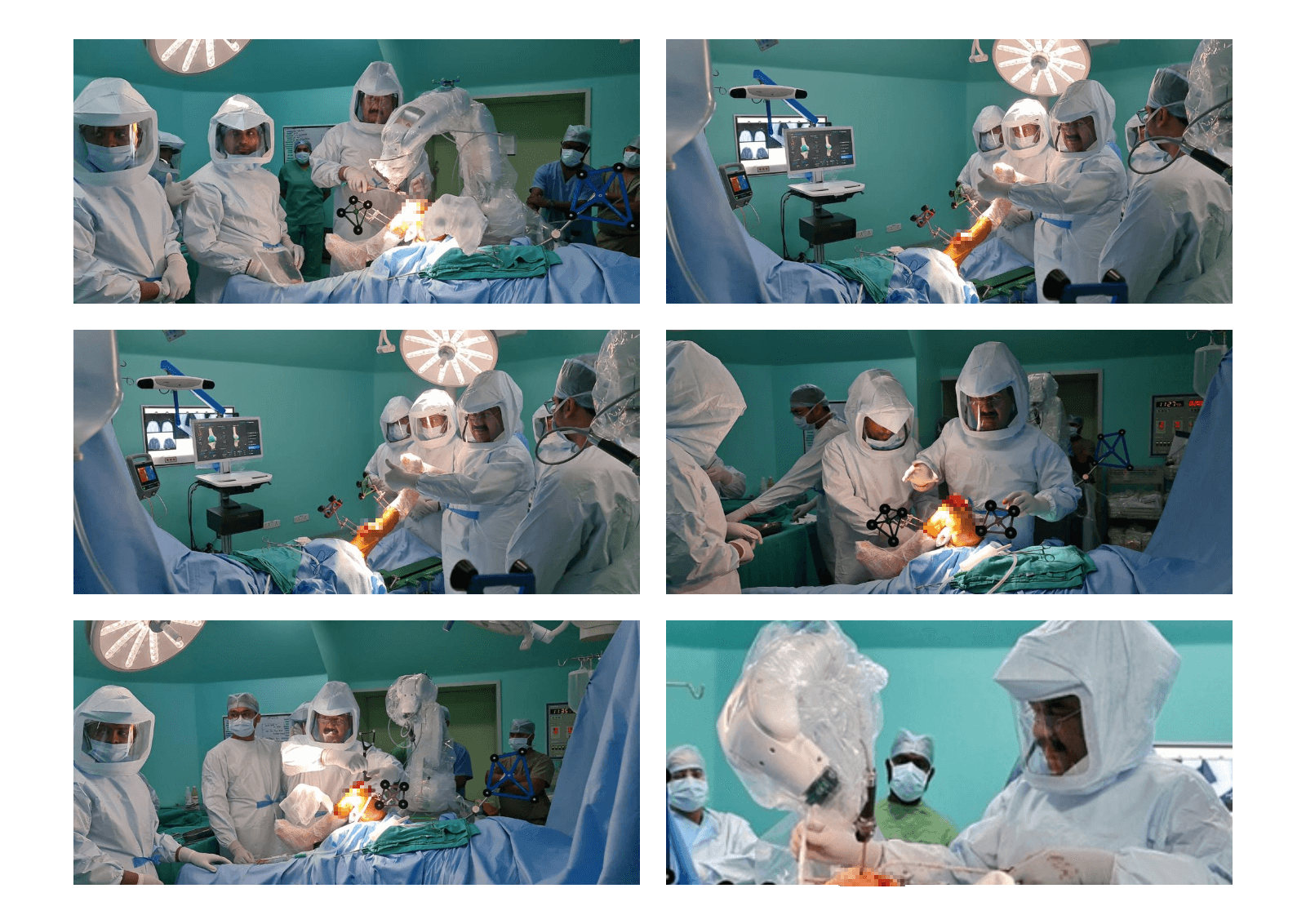
At Prof. Arora’s Knee & Hip Surgery Clinics, Robotic-assisted Knee Replacement is available and offers advantages for hypertensive patients. Robotics allows the surgeon to cut bone and align components with extreme precision. This means:
- Less tissue trauma: Smaller soft-tissue dissection reduces surgical stress.
- Less blood loss: Intraoperative bleeding is often lower compared to traditional TKR.
- Faster recovery: Patients tend to experience less pain and return to activity sooner.
- Near perfect Implant Alignment: Improved accuracy may reduce the chance of future implant problems.
These factors can translate to a smoother perioperative course for a patient with cardiovascular risks. Patients have told Prof. Arora that knees replaced with robotic assisted technology felt more “natural,” with quicker pain relif.
Day-of-Surgery Checklist
On the day of surgery, be prepared:
- Bring your blood pressure log and medication list. The team will re-check your BP on admission.
- Fast as instructed. Usually nothing by mouth after midnight, except medicines with a sip of water.
- Check your meds: Take your antihypertensives only with a small sip of water, unless told to skip them.
- Wear loose clothing. Avoid nicotine/caffeine before surgery.
- Ask questions: Confirm you understand your anesthesia plan.
The anesthesiologist will continuously monitor your BP during the operation. They have medications ready to quickly treat any highs or lows. Modern anesthesia also minimizes blood pressure swings.
Recovery and Post-Op Monitoring
After surgery, your BP will continue to be monitored closely. Early mobilization (walking with the help of walker on the second day) is encouraged, as it helps both knee recovery and blood pressure control.
- Physiotherapy: Follow the rehab plan given by your surgical team. Being active safely improves circulation and healing.
- Medication resume: You’ll usually restart your blood pressure medicines soon after surgery once you can take them by mouth. Keep taking them as prescribed.
- Watch for signs: Report symptoms like severe headache, chest pain, or leg swelling immediately — these could signal BP issues or other complications.
Continue home BP checks after discharge and follow up with your doctor or cardiologist as scheduled.
FAQs (Frequently Asked Questions)
Q: What if my blood pressure is very high on the day of surgery?
A: The anesthesiologist will treat severe spikes with IV medications and may delay anesthesia until blood pressure is controlled. In extreme cases (e.g. >180/110 mmHg), the operation may be postponed to optimize your blood pressure.
Q: Can I skip my BP pills on surgery day?
A: Generally, continue your medication as usual. Bring a list and a strip of each pill. The operating surgeon or medical team will advise if any specific drug needs to be withheld.
Q: Are there patients who shouldn’t have robotic surgery?
A: Most blood pressure patients can undergo robotic total knee replacement (TKR). The robot is a tool, and the surgeon makes all decisions. It may even help by reducing surgical stress. Your surgeon will confirm if any condition makes robotic surgery less suitable, but standard TKR is usually still possible.


.png)