


When we think about knee or hip replacement surgery, the first benefits that come to mind are obvious: less pain, steadier walking, and freedom from walking sticks. However, modern medical research has uncovered a deeply profound, hidden benefit that goes far safely beyond physical comfort.
Getting a joint replacement in your golden years can actually protect your mind, prevent cognitive decline, and significantly lower your risk of developing dementia or Alzheimer's disease.
For senior citizens, this high-level medical connection highlights that treating arthritic joints isn’t just about fixing your legs—it is a vital step in safeguarding your brain health and mental sharpness.
The Hidden Connection: How Joint Pain Affects the Brain
It sounds surprising, but your knees and your brain are constantly talking to each other. When you live with severe, chronic joint pain for years, it changes how your brain functions.
Medical studies using advanced brain scans show that chronic pain keeps the central nervous system in a constant state of stress. This continuous stress can actually lead to a reduction in gray matter—the part of the brain responsible for memory, decision-making, and emotional control.
Furthermore, severe pain drains your mental energy. When your brain is constantly busy processing "pain signals" from a damaged knee or hip, it has fewer resources left for memory retention, concentration, and sharp thinking.
3 Ways Joint Replacement Boosts Brain Health
When an experienced orthopaedic specialist restores your mobility through a joint replacement, the positive chain reaction in your body directly revitalizes your brain.
1. Reversing Inactivity (Boosting Blood Flow)
When you stop moving because of arthritis, your brain stops receiving vital sensory inputs from your limbs. Physical inactivity reduces blood flow to the head and slows down the production of new brain cells.
Once a damaged joint is replaced with a smooth, precision implant, you start walking and exercising again. Increased blood flow delivers vital oxygen and nutrients to the brain, stimulating neuroplasticity—the brain's natural ability to grow, repair itself, and build new neural connections.
2. Ending the Isolation Cycle (Mental Stimulation)
Severe joint pain shrinks a senior citizen’s world. When it hurts to walk, you stop visiting friends, going to community parks, or attending family gatherings.
Social isolation is one of the leading, scientifically proven accelerators of dementia. By restoring your ability to walk pain-free, a joint replacement allows you to re-engage with society, travel, play with grandchildren, and participate in social activities. This mental stimulation keeps the mind active, alert, and resilient against cognitive decline.
3. Restoring Deep, Healing Sleep
Chronic joint pain is notorious for waking seniors up multiple times a night. Sleep deprivation is terrible for the brain. During deep sleep, your brain activates a "waste clearance system" that flushes out toxic proteins associated with Alzheimer’s disease. By eliminating nighttime joint pain, replacement surgery restores deep, uninterrupted sleep, allowing your brain to clean and protect itself every single night.
Quick Comparison: The Choice Facing Seniors
| Chronic Untreated Arthritis | Post-Joint Replacement Recovery |
|---|---|
| Constant pain signals drain mental energy | Brain freed up for sharp thinking and memory |
| Social isolation due to poor mobility | Active social engagement and mental stimulation |
| Poor sleep quality alters brain chemistry | Deep, restorative sleep flushes out brain toxins |
| Accelerated risk of memory decline | Protected cognitive health and independence |
Schedule an evaluation of your joint condition
Take the first step toward pain-free mobility and protected health.
What the Medical Research Tells Us
Recent global epidemiological data has tracked thousands of seniors over a decade to see how joint surgeries affect mental decline. The findings are clear and undeniable.
The Scientific Proof: Seniors with severe arthritis who underwent a timely joint replacement surgery showed a substantially lower rate of memory decline and dementia in the years following the procedure compared to those who chose to leave their arthritis untreated and remained inactive.
The Value of Advanced, Low-Trauma Technology
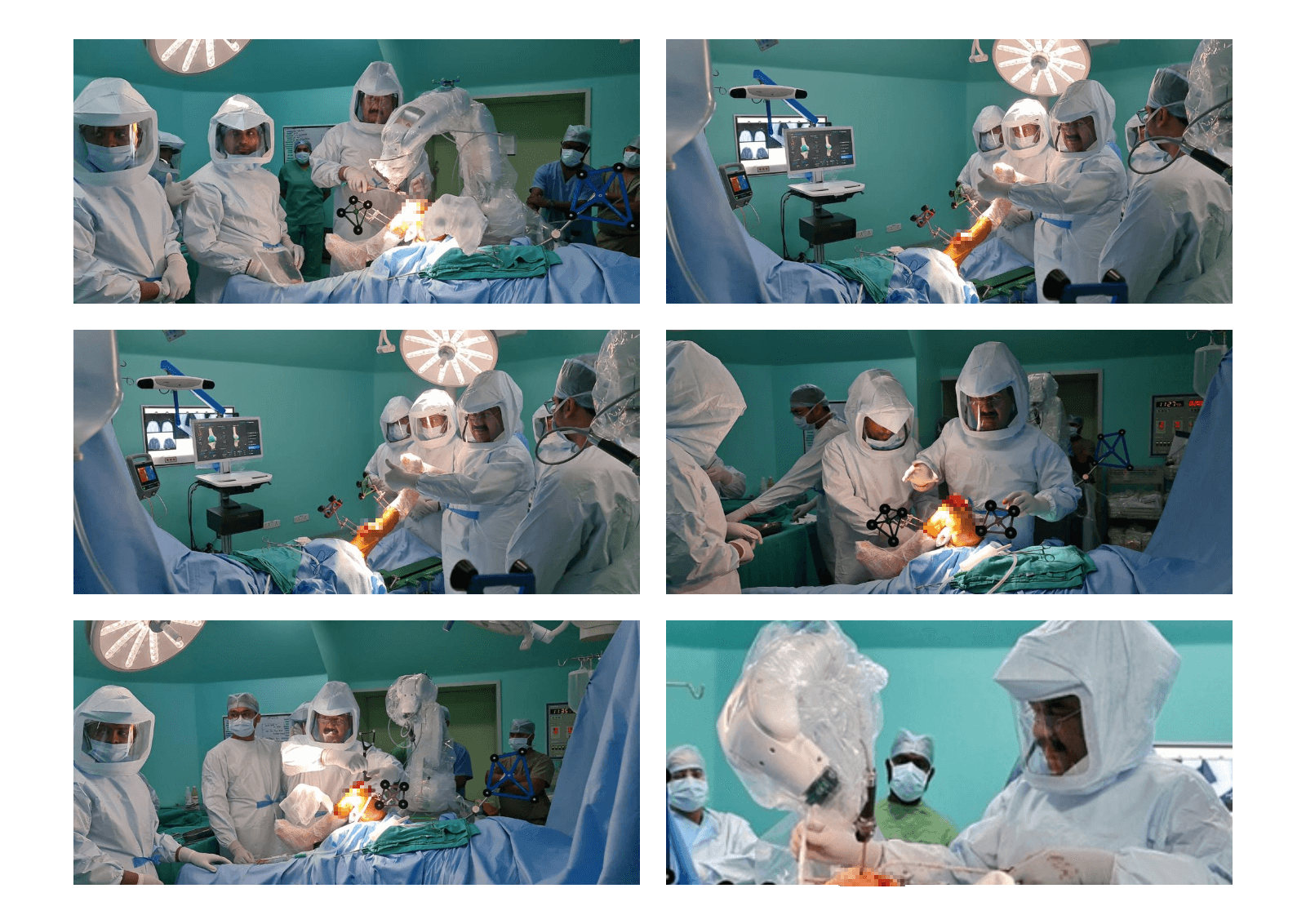
For older adults, the fear of surgery itself can sometimes cause anxiety. This is where modern advancements like Robotic-Assisted Joint Replacement make a massive medical difference.
Using highly advanced Robotic-Assisted Joint Replacement, a specialized surgeon can plan and execute the procedure with flawless precision. Because the robotic system ensures that only the damaged bone is touched—leaving surrounding healthy muscles, ligaments, and tissues completely undisturbed—the physical stress on a senior's body is drastically reduced.
Why this matters for an aging brain:
- Minimal Trauma: Less tissue damage means a much lower inflammatory response from the body, protecting the brain from post-operative confusion.
- Fewer Heavy Medications: Lower post-surgery pain means a reduced need for heavy, mind-fogging painkillers.
- Immediate Mobility: Fast-tracked recovery allows seniors to stand up and walk safely within hours, keeping the brain active and stimulated from day one.
Conclusion
Aging gracefully isn’t just about adding years to your life; it is about adding life to your years. This concept is called Health span—the period of life spent in good health, free from chronic disease and cognitive decline.
If you or an elderly loved one is delaying a necessary joint surgery out of fear or the belief that "I can manage with the pain at this age," remember that the cost of waiting goes far beyond a stiff knee. Every month spent sitting on a chair due to pain is a month your brain is deprived of movement and vital stimulation. Treating your joints in time is one of the most powerful decisions you can make to protect your independence, your memory, and your mental clarity for the future.
Dr. (Prof.) Anil Arora
Chairman & Head of Department – Orthopaedics & Robotic Knee & Hip Replacement
Max Super Speciality Hospital, Patparganj, New Delhi
Chairman & Chief Surgeon – Prof. Arora's Knee & Hip Surgery Clinics, Delhi NCR
.png)