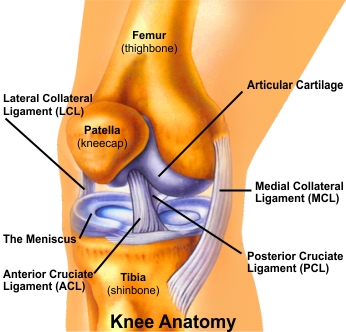



Walking should feel easy. But when every step brings pain, many seniors find themselves asking the same question: "Is this coming from my knee, or is it my back?"
This confusion is very common, and there's a good reason for it. Knee pain and a spine condition called spinal stenosis can feel surprisingly alike. Both make walking harder. Both can send pain down the leg. And both become more common as we grow older.
The good news is that there are clear clues that help tell the two apart. This guide explains those clues in simple, everyday language, so you can understand your own body better and have a more informed conversation with your doctor.
Quick Answer
If you read nothing else, read this:
- Knee pain usually stays around the knee joint. It gets worse with stairs, squatting, or standing up from a chair, and it often improves with rest.
- Spinal stenosis usually causes pain, numbness, or heaviness in both legs. It gets worse the longer you stand or walk, and it often eases when you sit down or lean forward, such as while pushing a shopping cart.
If your symptoms don't fit neatly into either pattern, that's common too. Sometimes both conditions exist together, and only a proper examination can confirm the real cause.
Why Does This Mix-Up Happen So Often?
Your spine and your legs share the same nerve pathways. When something presses on a nerve in your lower back, the pain or numbness can travel all the way down to the knee and foot — even though the knee joint itself may be perfectly healthy.
At the same time, a painful knee can change the way you walk. Favoring one leg or walking with poor posture adds extra strain on your lower back over time. Because the two areas are so closely connected, it's easy to blame the wrong one.
Who Is More Likely to Have Each Condition?
Knee pain (osteoarthritis) becomes more likely with:
- Age over 50
- Extra body weight, which adds pressure on the knees
- Past knee injuries
- Years of standing or physical labor
Spinal stenosis becomes more likely with:
- Age over 50, especially after 60
- Natural, long-term wear on the spine's discs and joints
- A naturally narrower spinal canal in some people
- Previous back injury or spine surgery
Both conditions are a common part of aging, and both can usually be managed well once properly diagnosed.
Signs Your Pain Is Coming From the Knee
These clues usually point to a joint problem, most often osteoarthritis:
- Pain is felt right in or around the knee, not spread down the whole leg
- Pain gets worse with climbing stairs, squatting, kneeling, or standing up from a chair
- The knee may feel swollen, warm, or stiff
- You may notice clicking, catching, or a "giving way" feeling
- Pain tends to ease with rest and return with activity
- Morning stiffness that improves after a few minutes of gentle movement
Signs Your Pain Is Coming From the Spine (Spinal Stenosis)
Spinal stenosis happens when the space around the nerves in your lower spine narrows, placing gentle but constant pressure on those nerves. Watch for:
- Pain, numbness, tingling, or a heavy, tired feeling in both legs, rather than one joint
- Symptoms that get worse the longer you stand or walk
- Noticeable relief when you sit down or lean forward — many people feel better while pushing a shopping cart, leaning on a walker, or riding a bicycle
- Legs that feel weak or tired rather than sharply painful
- Discomfort that builds while standing still, such as while cooking or waiting in line
- Lower back pain, though this isn't present in every case
Doctors sometimes call this pattern "neurogenic claudication" — simply meaning leg pain caused by nerve pressure in the spine, rather than by the knee joint or poor circulation.
Knee Pain vs. Spinal Stenosis: Side-by-Side Comparison
| Feature | Knee Pain (Joint) | Spinal Stenosis (Spine) |
|---|---|---|
| Where it's felt | In or around the knee | Both legs, sometimes lower back |
| Gets worse with | Stairs, squatting, standing up | Standing or walking for a while |
| Gets better with | Resting, sitting | Sitting, leaning forward |
| Swelling | Often present | Usually absent |
| Numbness or tingling | Uncommon | Common |
| Affects one leg or both | Usually one | Usually both |
| Leaning on a cart or walker | Little difference | Often brings quick relief |
A Simple At-Home Check (Not a Diagnosis)
Here are two everyday clues doctors often ask about:
The shopping cart clue: If leaning forward while walking, such as pushing a grocery cart, gives you quick relief, this often points toward the spine.
The sitting clue: If sitting down for a few minutes quickly relieves leg pain or numbness, this also points more toward the spine than the knee.
These are helpful observations, not a diagnosis. Several conditions can share similar symptoms, so a proper examination is the only reliable way to know for certain.
Not sure if it's your knee or your spine?
Get a clear, simple answer with a proper evaluation from Dr. Arora.
When to See a Doctor Without Delay
Most walking-related pain can wait for a routine appointment. However, see a doctor promptly if you notice:
- Sudden weakness in one or both legs
- Loss of bladder or bowel control
- Numbness in the inner thighs or groin area
- A fall caused by your leg suddenly giving way
- Pain that is severe or rapidly getting worse
These can signal a more serious nerve problem that needs urgent attention.
How a Doctor Finds the Real Cause
A specialist like Dr. Arora typically follows a simple, step-by-step process:
- Listens to your symptoms — where it hurts, what makes it better or worse, and how long it's been going on
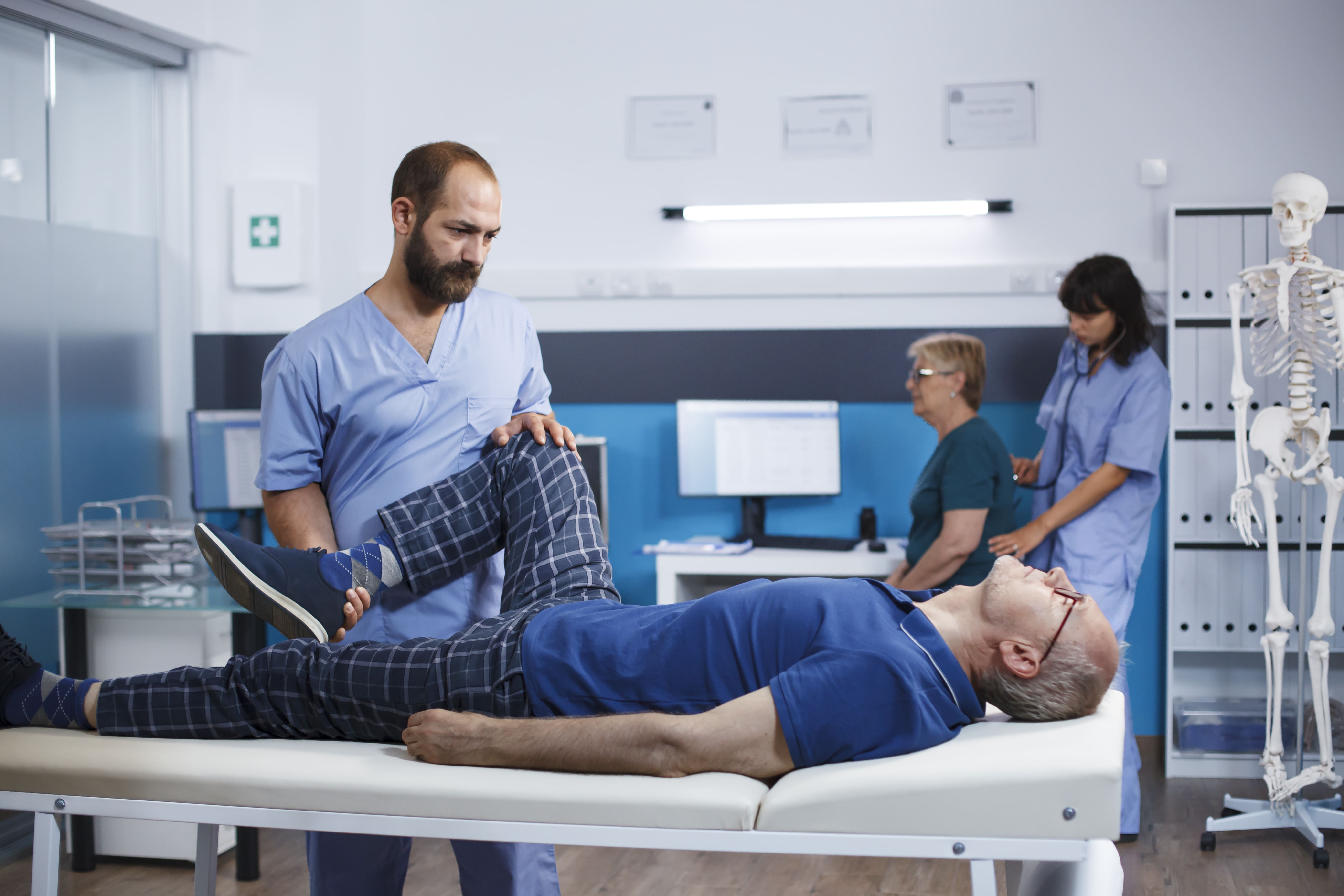
- Watches you walk and checks your posture
- Tests your reflexes, muscle strength, and sensation in the legs
- Recommends imaging if needed — an X-ray usually checks the knee joint, while an MRI looks closely at the spine
This process usually gives a clear answer without any need for guesswork.
Helpful Tips While You Wait for Your Appointment
- Avoid standing in one place for too long without support
- Use a cane or walker if it helps you feel steadier
- Short, gentle walks with breaks are usually better than staying completely still
- Keep a simple note of when your pain is worse — this small detail helps your doctor a great deal
The Bottom Line
Knee pain and spinal stenosis can feel confusingly alike, but your body usually gives clear clues once you know what to look for. Pain that stays at the knee and calms with rest often points to the joint. Pain or numbness in both legs that eases when you sit or lean forward often points to the spine.
The safest step is to never guess on your own. A short consultation with Dr. Arora can identify the true cause of your pain and set you back on the path to walking comfortably.
Not sure which one is affecting you?
Book a consultation with Dr. Arora today and get a clear, simple answer.
Schedule an evaluation of your joint condition
Take the first step toward pain-free mobility and protected health.
.png)