


If you have weak bones and you have been advised knee replacement, you may have one question sitting at the back of your mind: "Will the new joint actually hold in my bones?"
This is one of the most common concerns among seniors with osteoporosis. It's a fair question, and it deserves a clear, honest answer — not a vague reassurance.
The short version: yes, knee replacement can usually be done safely even with severe osteoporosis, but it needs careful planning. This is exactly where robotic-assisted knee replacement makes a meaningful difference. Let's go through it step by step.
Quick Answer
- Osteoporosis weakens bone density, which can make it harder for an implant to "grip" the bone firmly, especially with older, less precise surgical methods.
- Robotic-assisted surgery allows extremely precise bone cuts and implant placement, which reduces stress on weak bone and improves how well the implant fits and holds.
- Surgeons also take extra steps — like bone density testing, careful implant selection, and sometimes cement fixation — to make knee replacement safer in severe osteoporosis.
- Most patients with osteoporosis go on to have successful, long-lasting knee replacements when the surgery is properly planned.
What Is Osteoporosis, and Why Does It Matter Here?
Osteoporosis is a condition where bones lose density and become more porous and fragile over time. Think of healthy bone like a dense sponge, and osteoporotic bone like the same sponge with larger holes — it's still bone, but there's less solid material to hold onto.
This matters for knee replacement because the new knee joint (the implant) needs to attach firmly to your bone to work well for many years.
What Does "Implant Fixation" Actually Mean?
"Fixation" simply means how firmly the implant is attached to your bone. There are two common methods:
- Cemented fixation — a special bone cement holds the implant in place immediately, like a strong adhesive.
- Cementless (press-fit) fixation — the implant fits snugly, and your own bone gradually grows into its surface to lock it in place.
Both work well in healthy bones. In weaker bones, the choice and technique matter much more.
Will My Implant Hold If I Have Weak Bones?
This is the real question behind the worry, so let's answer it directly.
Weak bone does make fixation more challenging, mainly because:
- There's less solid bone for the implant or cement to grip
- The bone is more fragile, so there's a slightly higher risk of small fractures during surgery if instruments aren't precisely controlled
- Poor alignment can put uneven pressure on already-weak areas, raising the risk of loosening over time
However — and this is the important part — none of this means knee replacement is unsafe for you. It means your surgeon needs more precision and more planning, which is exactly what robotic technology is designed to provide.
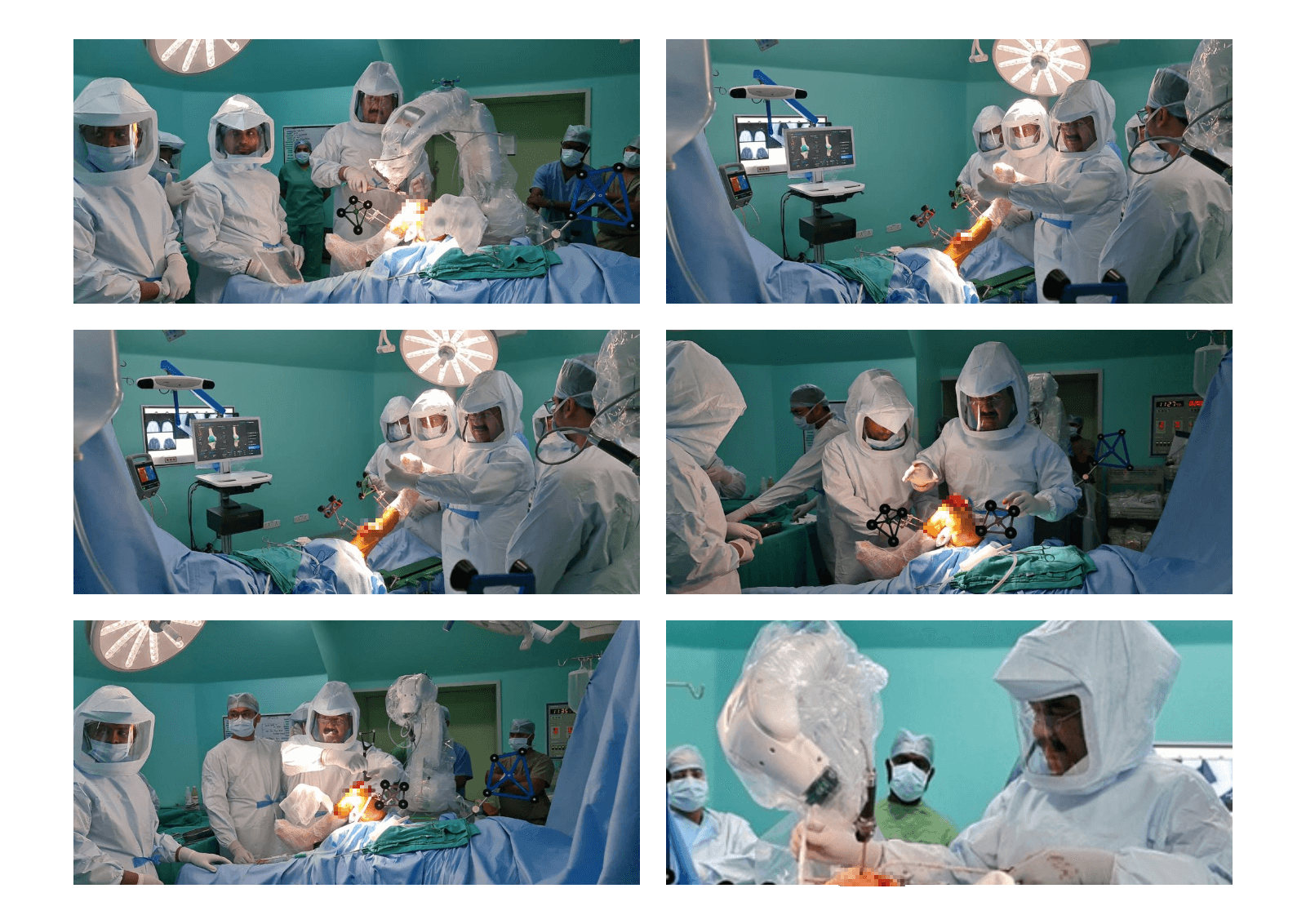
How Robotic Knee Replacement Helps When Bones Are Weak
Think about the difference between drilling a screw into a solid brick wall versus a soft, crumbly one. In the crumbly wall, the size, depth, and angle of the hole matter far more — there's less room for error.
Weakened bones work the same way. Robotic-assisted surgery helps in several specific ways:
- Highly precise bone cuts — accurate to a fraction of a millimeter, based on your own 3D scan, so no more bone is removed than necessary
- Better implant alignment — reduces uneven pressure on the bone, which lowers the risk of loosening later
- Gentler, more controlled bone preparation — reduces the force and impact used during surgery, which matters in fragile bone
- A personalized surgical plan — mapped out from your own imaging before surgery even begins, rather than relying only on manual judgment during the operation
This precision doesn't just make the surgery more accurate — it directly addresses the biggest risks that weak bone creates.
Traditional vs. Robotic Surgery: A Simple Comparison
| What Matters in Weak Bone | Traditional Surgery | Robotic-Assisted Surgery |
|---|---|---|
| Precision of bone cuts | Guided by hand and eye | Guided by a personalized 3D plan |
| Bone preserved | May remove slightly more | Removes only what's planned |
| Implant alignment | Good, but more variation | Consistently accurate |
| Force used during preparation | Can involve more impact | Generally gentler and controlled |
| Risk of small fractures during surgery | Slightly higher in weak bone | Lower, due to precision |
Schedule an evaluation of your joint condition
Take the first step toward pain-free mobility and protected health.
Other Ways Surgeons Protect Weak Bone
Robotic precision is one part of the plan, but not the only one. Your surgeon may also:
- Choose cemented fixation over press-fit, since cement doesn't rely on new bone growth into the implant
- Select an implant specifically designed for lower bone density
- Use longer stems or added support on the implant if there is significant bone loss
- Plan the entire surgery around your bone density test results
Tests Done Before Surgery
If you have known or suspected osteoporosis, your doctor will usually recommend:
- A DEXA scan (bone density test) to measure exactly how strong or weak your bones are
- Blood tests to check calcium and vitamin D levels
- A review of your medical history, including any previous fractures or long-term steroid use
Are You at Higher Risk? Simple Signs to Watch For
You may be more likely to have significant bone weakness if you have:
- Had a fracture from a minor fall in the past
- A family history of osteoporosis or hip fractures
- Taken long-term steroid medication
- Gone through early menopause (for women)
- A low body weight or history of poor nutrition
If any of these apply to you, mention it to your doctor before surgery — it helps them plan the safest approach for you.
What You Can Do Before Surgery
- Discuss a bone density test with your doctor if you haven't had one recently
- Follow your doctor's advice on calcium, vitamin D, or bone-strengthening medication
- Eat a balanced diet with adequate protein and calcium
- Stay as physically active as your doctor allows — gentle weight-bearing activity supports bone health
- Avoid smoking, which slows bone healing
Recovery and Long-Term Outlook
Most patients with osteoporosis who undergo a well-planned robotic knee replacement go on to walk comfortably and enjoy long-lasting results. Recovery may be paced a little more carefully, and your doctor may recommend continued bone-strengthening treatment afterward to protect both the implant and your overall skeletal health.
The Bottom Line
Severe osteoporosis does not rule out knee replacement — it simply means the surgery needs more precision and planning. Robotic-assisted technology, combined with careful implant selection and bone health management, gives surgeons the tools to protect weak bones and help the implant hold firmly for years to come.
The best next step is a personal discussion with Dr. Arora, who can review your bone density and overall health to design a surgical plan suited exactly to you.
Worried about whether your bones are strong enough for knee replacement?
Book a consultation with Dr. Arora to get a clear, personalized answer.
Schedule an evaluation of your joint condition
Take the first step toward pain-free mobility and protected health.
.png)